
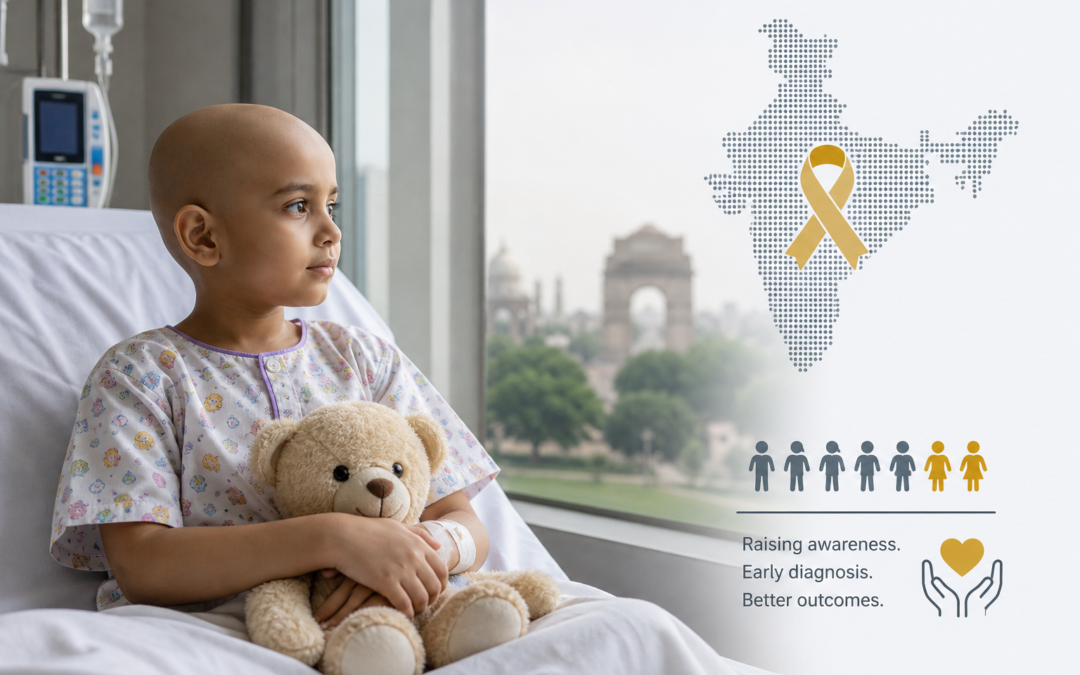
Cancer in children is uncommon. It makes up only about 3 to 5 percent of all cancers found in India. The country’s population is so large, however, that it still has more affected children than any other nation, close to one in five of all childhood cases worldwide. These cancer statistics look small as a percentage and heavy as a headcount.
According to the Medical Oncology Team at KNMH, the small percentage leads some parents to feel that cancer in a child is too rare to worry about. A fever that keeps returning, a swelling that does not settle, or a child who has stopped wanting to play deserves an examination and a blood test, not another week of waiting at home.
Wondering what tests are done when a child is suspected of having cancer?
What Do the Childhood Cancer Statistics in India Show?
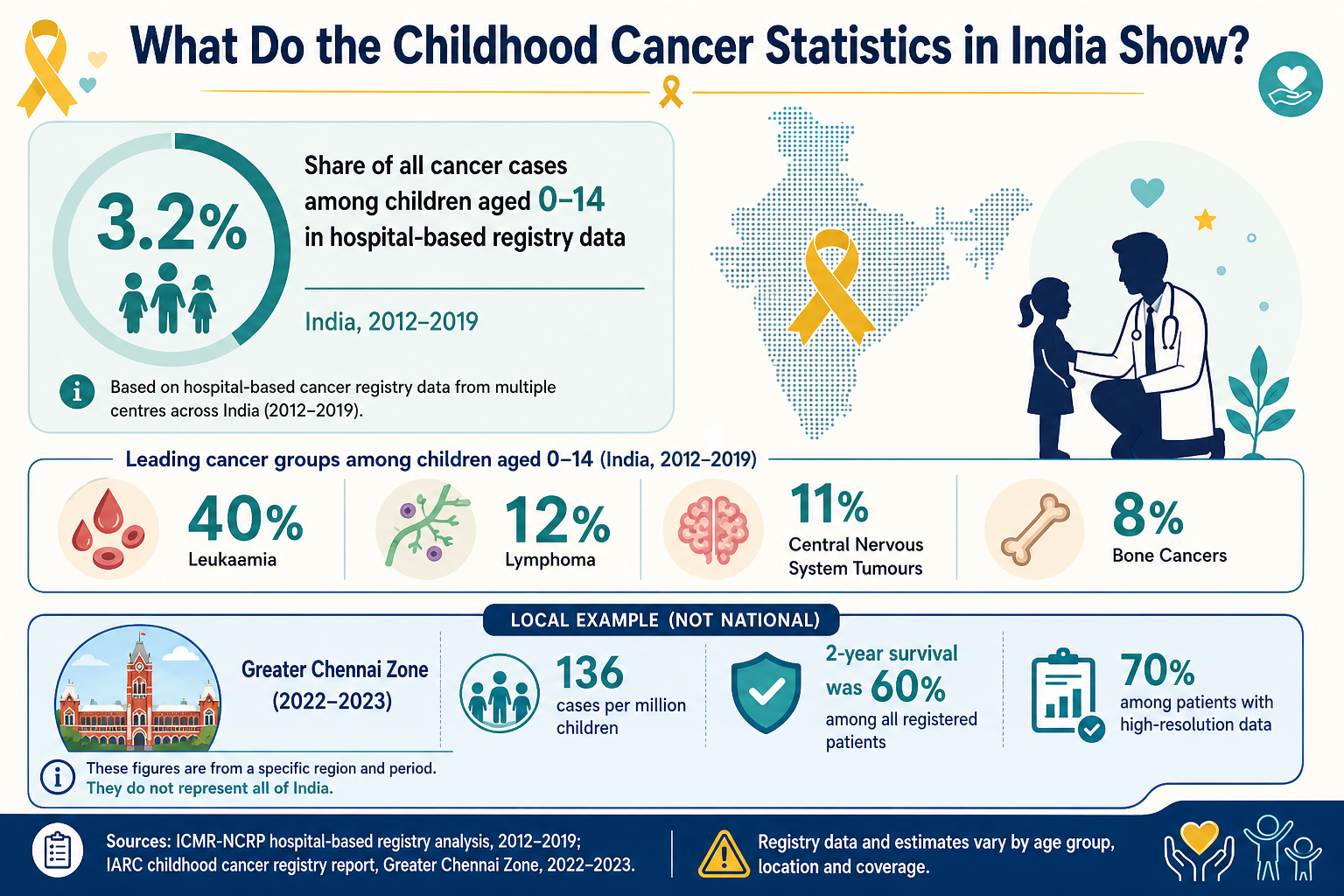
Exact figures are hard to pin down, but the broad picture is consistent.
- A Small Share of All Cancers – Out of every hundred cancers diagnosed in the country, only three to five occur in children. The rest are in adults, which is why hospitals see so many more of them.
- A Large Share of the World’s Cases – India has one of the biggest child populations anywhere, so it accounts for roughly a fifth of childhood cancers globally. Estimates run to tens of thousands of new cases a year.
- The Usual Types – Leukaemia is the commonest. Lymphomas and tumours of the brain and spinal cord follow, and in younger children kidney and eye tumours are seen.
- Gaps in the Records – Cancer registries cover only parts of the country, and many children in villages are never recorded. Part of the reason is that fewer families live near a Regional Cancer Centre, so the true number is probably higher than the published one.
Which Warning Signs Should Parents Take Seriously?
Most of these signs have ordinary causes. What matters is that they last.
- Fever and Paleness – A fever that comes back without an infection to explain it, a child who looks washed out, or bruises and nosebleeds with no injury behind them can point to leukaemia.
- A Lump or Swelling – A lump in the neck, groin or armpit that does not hurt and does not shrink should be examined. A belly that looks swollen in a thin child needs the same attention.
- Morning Headache and Vomiting – Headaches that are worst on waking and end in vomiting, together with unsteady walking or a squint that is new, can be signs of a brain tumour.
- Bone Pain and a Changed Eye – A child who limps or wakes at night with bone pain needs a scan. A white glint in the pupil in photographs is a classic sign of an eye tumour, so show it to a paediatrician quickly.
When symptoms persist, tests settle the question. Our post on how cancer is diagnosed step by step explains what to expect.
What Determines the Right Treatment Approach for Childhood Cancer?
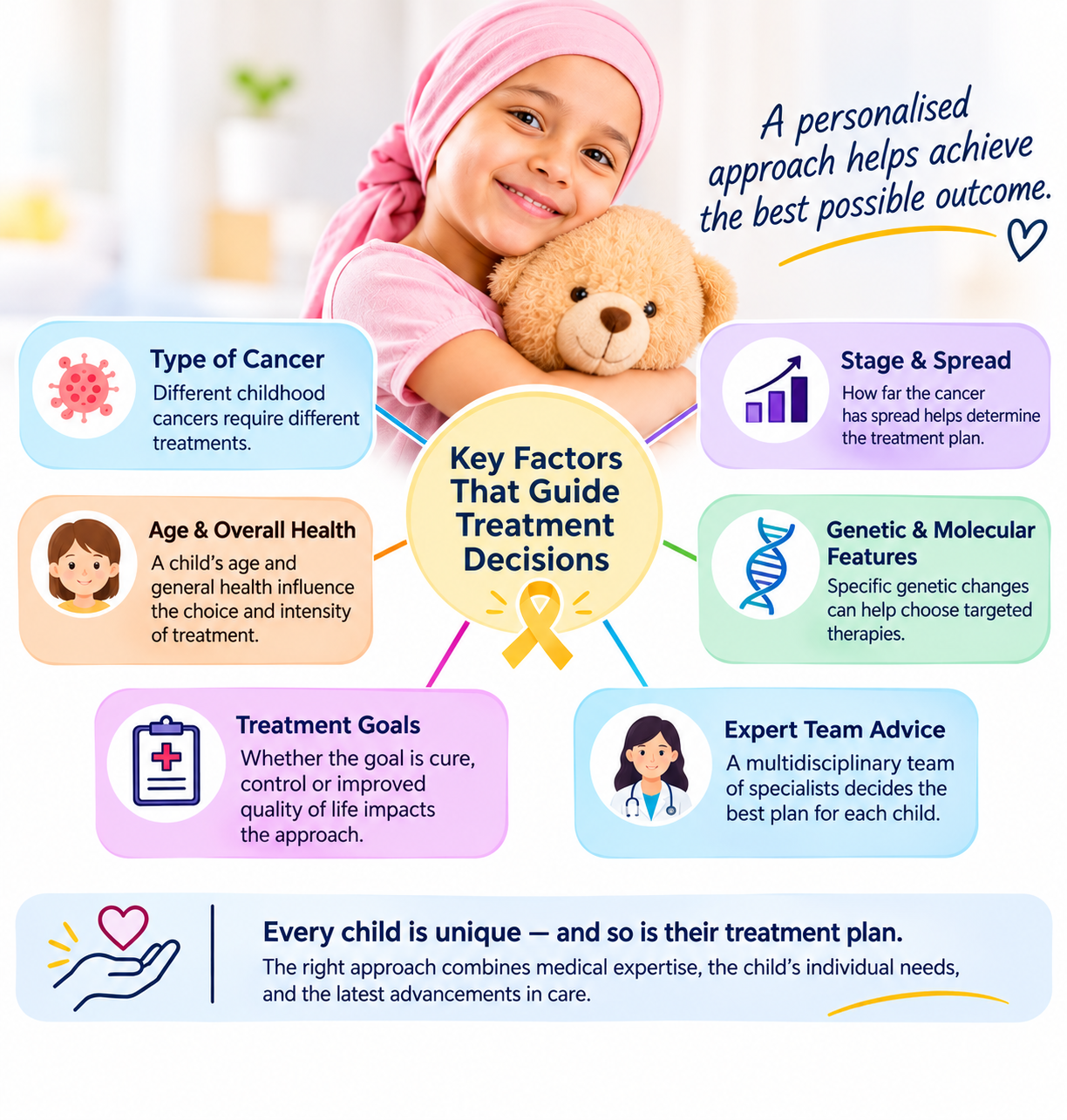
Children are not small adults, and their plans are built accordingly.
- Type and Stage – Leukaemia is treated mainly with chemotherapy given over many months. A solid tumour may need surgery first, with chemotherapy or radiation around it.
- Age and Body Size – Drug doses are worked out from the child’s weight and height. In very young children, radiation is avoided where possible because it can affect growth.
- How the Child Responds – Blood counts and scans decide whether to continue, reduce or change the plan. The first plan is rarely the last.
- Family Circumstances – Treatment can mean repeated admissions over a year or more. Distance from the hospital, a caregiver able to stay, and cost all count, and parents can read whether Ayushman Bharat covers cancer treatment.
Key Takeaways
- Childhood cancer is only 3 to 5 percent of cancers in India, but the country has the largest number of affected children in the world.
- Leukaemia is the commonest type, followed by lymphomas and brain tumours.
- Symptoms that last more than a couple of weeks should be examined, not watched.
- Many children recover fully, especially when the cancer is found early and treated at a proper centre.
FAQ
Is cancer common in children in India?
No. It is rare in any single child, but India’s large population gives it the highest number of cases worldwide.
Which cancer is most common in children?
Leukaemia, which starts in the blood and bone marrow, is the commonest.
Can childhood cancer be cured?
Many children are cured, particularly when the disease is found early. The outcome depends on the type and stage.
Does childhood cancer run in families?
Rarely. Most cases have no family link, though a small number are tied to inherited conditions.
Reference
- World Health Organization – Cancer in Children: https://www.who.int/news-room/fact-sheets/detail/cancer-in-children
- National Cancer Institute – Childhood Cancers: https://www.cancer.gov/types/childhood-cancers
Disclaimer
This article is for general education and does not replace advice from a qualified doctor. Please consult a specialist before making any decision about your child’s health.