



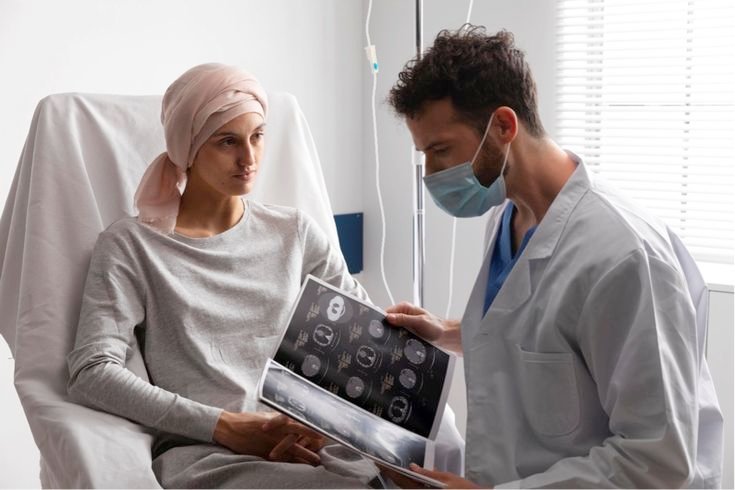
Cancer is diagnosed through a structured, multi-step process that begins with a physical examination and review of symptoms and medical history, followed by blood and urine analysis, imaging studies such as CT, MRI, and PET scans to locate and assess the tumour, and a biopsy to confirm whether cells are malignant. Each step builds on the previous one, narrowing the diagnosis until the cancer type, location, and stage are clear enough to build a treatment plan.
According to a Senior Oncologist at KNMH, the best cancer hospital in Prayagraj,
“Delayed diagnosis is one of the most common reasons patients arrive at advanced stages the tests exist, but access to all of them in one place often doesn’t.”
Skip the back-and-forth. Get a complete cancer workup at KNMH’s oncology unit today.
What steps does cancer diagnosis actually involve?
Most people going through this for the first time are surprised by how much happens before any answer arrives. It’s a sequence, and each step depends on what the one before it found.
- Physical examination and history first: Before any scan or blood draw, a doctor goes through symptoms, family history, and lifestyle, and does a hands-on examination looking for lumps, swelling, or visible skin changes. This appointment decides whether the process moves forward and in which direction, so it shouldn’t be rushed through or treated as a formality.
- Blood tests narrow the search: Some cancers leave measurable traces in blood, PSA for prostate, CA-125 for ovarian, CEA for colorectal. An abnormal result isn’t a confirmed cancer, but it tells the team where to focus next and with what level of urgency, which shapes everything that follows.
- Imaging shows size, location and spread: CT, MRI, ultrasound, PET – which one gets used depends on what’s being investigated. Scans show the mass, how large it is, whether it’s pressing against surrounding tissue, and whether anything looks suspicious elsewhere in the body. A scan cannot confirm malignancy though. That’s a separate step.
- Biopsy is where the answer actually comes from: Tissue is taken from the suspicious area and a pathologist examines it under a microscope. Cancer type, how abnormal the cells are, how the tumour is likely to behave – none of that is knowable without this. Everything before the biopsy is investigative groundwork. This is the step that closes the question.
Once cancer is confirmed, staging begins – more imaging, sometimes bone marrow tests – to map how far it has spread. The cancer diagnosis and treatment departments at KNMH cover every step of this process without the patient needing to go elsewhere.
What actually happens after a positive diagnosis?
Most patients aren’t prepared for what follows the confirmation. There are more results, more waiting, more decisions, and they arrive faster than expected.
- The pathology report goes much deeper than a yes or no: It names the cancer type, grades the tumour based on how abnormal the cells look, and flags genetic markers that affect which drugs will actually work on it. Two patients with the same cancer at the same stage can end up on completely different treatment plans because of what shows up in this one report alone.
- Staging scans fill in what the biopsy can’t tell you: Has it reached lymph nodes? Spread to the liver, lungs, or bones? A PET-CT or MRI after confirmation answers those questions. The staging result and pathology report together are what every treatment decision gets built on, and missing one of them leaves real gaps in the plan.
- At a Regional Cancer Centre the case goes to a tumour board: Oncologists, surgeons, radiologists, and pathologists review it together before a plan is finalised. What comes out of that collective review picks up things a single specialist working alone would miss. Designated RCCs run this process as standard. Many hospitals don’t.
- Treatment starts when the plan is ready: Surgery, chemotherapy, radiation, or some combination – the sequence depends on cancer type, stage, and the patient’s overall condition. At a hospital where all three treatment arms sit on the same campus, the move from confirmed diagnosis to first treatment session doesn’t require starting the whole referral process somewhere new.
The hardest part of cancer diagnosis for most families isn’t any single test. It’s the accumulation of waiting for appointments, for results, for the next step. A hospital running imaging, pathology, tumour board, and treatment under one roof shortens that wait in ways a scattered multi-facility process can’t match. It’s a model KNMH has refined over decades of cancer care in Prayagraj.
Why Choose Kamala Nehru Memorial Hospital ?
Founded by Mahatma Gandhi in 1941, KNMH in Prayagraj is a NABH-accredited, not-for-profit Regional Cancer Centre recognised by the Government of India since 1994. Radiology, Pathology, Nuclear Medicine, Medical Oncology, Surgical Oncology, Radiation Oncology, and a dedicated Tumour Board are all on one 400-bed campus, treating over 1.68 lakh patients every year.
FAQ
What tests are used to diagnose cancer?
Blood tests, imaging scans, and a biopsy are the primary tests used to diagnose and confirm cancer.
Is a biopsy always required to confirm cancer?
Yes, a biopsy is the only definitive test that confirms whether cells are malignant and identifies cancer type.
How long does the cancer diagnosis process take?
It varies by cancer type but having imaging, pathology, and oncology in one hospital speeds the process significantly.
Does KNMH have full cancer diagnostic facilities on campus?
Yes, KNMH has Radiology, Pathology, Nuclear Medicine, and a Tumour Board all available on the same campus.