


This website is being reviewed and updated in line with the National Medical Commission (NMC) guidelines on ethical advertising and public communication by registered medical practitioners.
Kamala Nehru Memorial Hospital Regional Cancer Centre logo with two white silhouettes on blue and 'Estd: 1941' text.
NABH
What Are the Early Signs of a Neurological Problem?

What Are the Early Signs of a Neurological Problem?

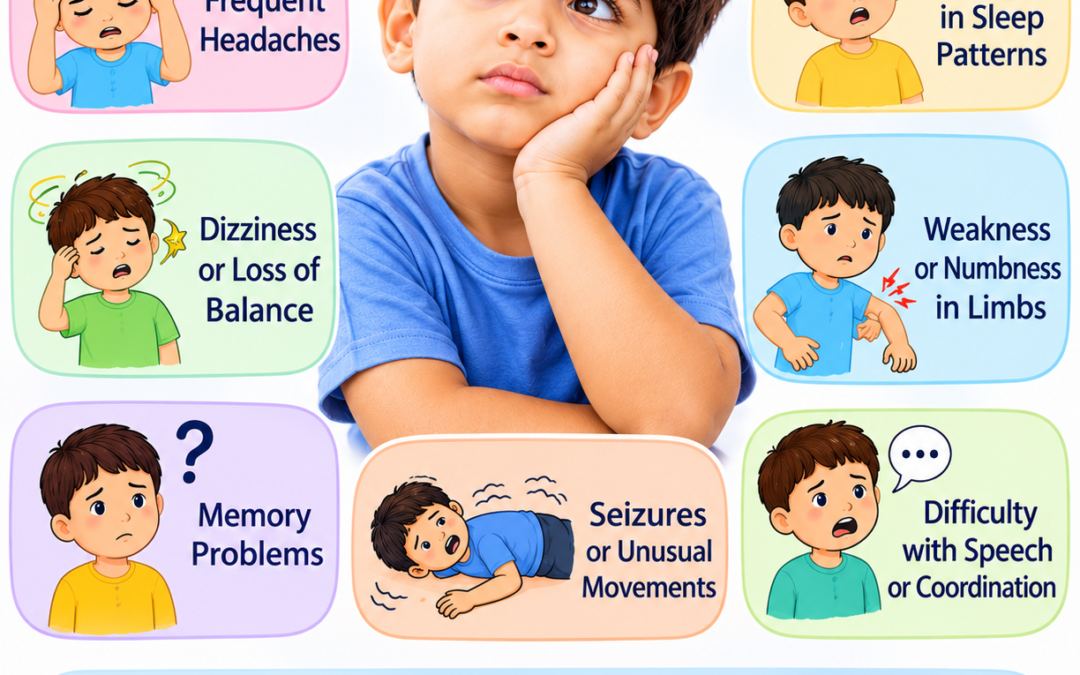
The early signs of a neurological problem depend on where the trouble starts, whether in the brain, the spinal cord or the nerves. These three run almost everything the body does, so a first sign can be as small as a tingling thumb or as loud as a collapse. Some people get weeks of warning. Others get none.

According to the Medical Oncology Team at KNMH, the symptom most often put off is a headache. One that worsens over several weeks, or arrives with vomiting on waking, needs a scan and not another painkiller. Most turn out to be harmless. A few are tumours, and those are far easier to treat when found early.

Wondering where to go for scans and specialist care? Read: What Is a Regional Cancer Centre and Why Does It Matter?

What Are the Common Neurological Symptoms?

These rarely announce themselves. They creep in, and people put them down to age or a bad week.

  • Numbness and Tingling – Pins and needles in the feet that spread upward over months. The nerves are usually the cause, and diabetes is the commonest reason, so blood sugar is checked first.
  • Weakness and Clumsiness – Cups slipping out of the hand. The same step catching a foot twice in one week. Buttons taking longer than they used to. Handwriting growing smaller on the page.
  • Memory and Word Trouble – Everyone forgets a name. Forgetting that a whole conversation took place is different, and so is getting lost on a road walked for twenty years.
  • Tremor and Stiffness – A hand that shakes while resting and settles when it reaches for something. A slower walk, an arm that has stopped swinging. Parkinson’s disease often begins this way.

The hospital’s list of services includes a Neuro department for consultation.

Which Warning Signs Need Urgent Attention?

Some of these early symptoms of neurological disorders cannot wait for an outpatient slot. Go to an emergency department.

  • Face, Arm and Speech – One side of the face droops. One arm will not lift. Words come out slurred. Treat it as a stroke until a doctor says otherwise, because the first few hours decide how much of the brain is saved. Note the time it began.
  • A Sudden, Severe Headache – It reaches full strength within a minute and is the worst the person has ever had. A headache with fever and a stiff neck is just as urgent.
  • A First Seizure – Convulsions, a blank stare that does not break, or a collapse with no explanation. Even if the person seems fine afterwards, the cause has to be found.
  • Sudden Loss of Vision or Balance – One eye going dark. Double vision from nowhere. Dizziness so strong that standing is impossible.

When the cause is not obvious, scans and blood tests narrow it down, in the same way described in our post on how cancer is diagnosed step by step.

What Determines the Right Treatment Approach for Neurological Problems?

The same symptom can come from very different causes, and the plan follows the cause.

  • The Underlying Cause – A stroke, epilepsy, nerve damage and a brain tumour are each treated in their own way. A tumour may call for surgery, radiation therapy, or both.
  • How Fast It Began – Minutes means an emergency. Months leaves room for planned tests.
  • The Tests Needed – An MRI or CT scan for the brain and spine, an EEG for electrical activity, nerve conduction studies for the arms and legs. The symptom decides which one is ordered.

Age and Other Illness – Blood pressure, diabetes, heart disease and the medicines already being taken all limit what is safe to give.


Key Takeaways

  • The first sign can be tiny, like a tingling thumb, or sudden, like a collapse. Both count.
  • Numbness, tremor or forgetfulness that is getting worse over weeks should be examined.
  • Slurred speech, a drooping face, a weak arm, a sudden worst-ever headache or a first seizure: go to an emergency department.
  • Scans and tests come first. The treatment depends on what they show.

FAQ

What is usually the first sign of a neurological disorder?

 It differs from person to person. Tingling, a weak grip, forgetfulness and a shaky hand are the ones we see most.

When does a headache need a scan?

When it hits suddenly and hard, keeps getting worse, or comes with vomiting, fever or weakness in a limb.

Can stress alone cause tingling or dizziness?

 Sometimes. But if it lasts more than a couple of weeks, or spreads, get it examined anyway.

Which doctor should I see first?

 A neurologist is the right one. A family physician can examine you first and refer you on.

Reference

Disclaimer: This blog is for general information only and does not replace professional medical advice; transplant eligibility depends entirely on individual diagnosis and health status.

How Do You Prepare for a High-Risk Pregnancy?

How Do You Prepare for a High-Risk Pregnancy?

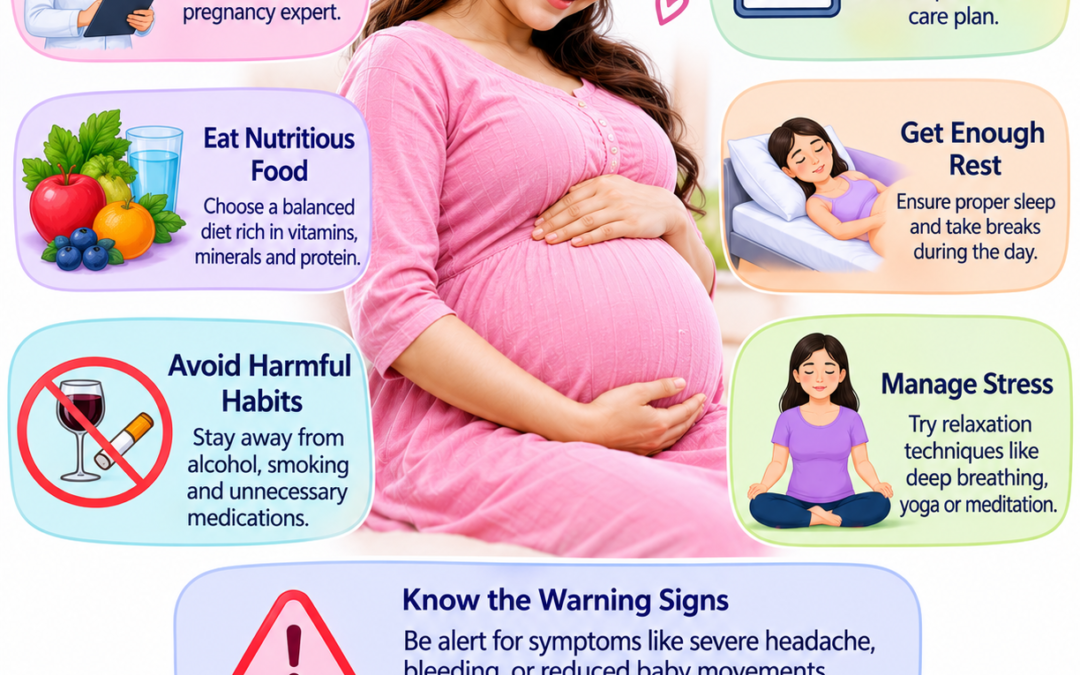
Preparation for a high-risk pregnancy involves regular consultation with an obstetrician, control of any existing medical condition, and a schedule of check-ups and scans that is more frequent than in a routine pregnancy. This is best started before conception, although it remains useful at any stage once the pregnancy is confirmed. The extra monitoring is meant to identify a problem early, while it can still be managed with simple measures.

According to the Medical Oncology Team at KNMH, a high-risk label does not mean that a complication is certain. It means that the pregnancy requires closer follow-up. Women who have previously received cancer treatment, or who are diagnosed with cancer during pregnancy, are an example, since the oncologist and the obstetrician need to plan the care together.

Planning a pregnancy with a health condition?

What Are the Best High-Risk Pregnancy Preparation Tips?

What Are the Best High-Risk Pregnancy Preparation Tips?

These steps are simple, and they are most effective when they are started early and followed regularly.

  • Consult the Doctor Before Conceiving – A pre-pregnancy visit allows the doctor to review blood sugar, blood pressure, thyroid function and body weight, and to replace any medicine that is not safe in pregnancy. Regular medicines should not be stopped without medical advice, since stopping some of them can be more harmful than continuing them. The visit also gives the couple a chance to ask what the pregnancy is likely to involve.
  • Control Existing Medical Conditions – Diabetes, high blood pressure, thyroid disease, epilepsy and kidney or heart disease are easier to manage in pregnancy when they are well controlled at the time of conception. Even a few weeks of stable control can make a difference to the pregnancy, and the doctor may repeat certain tests to confirm it.
  • Attend Diet and Lifestyle – Folic acid should be taken as advised, and meals should include enough protein and iron. Tobacco and alcohol are best avoided completely, and vaccinations should be updated early because some cannot be given once pregnancy has begun.
  • Choose the Place of Delivery in Advance – The hospital should have a blood bank, round-the-clock obstetric cover and a newborn intensive care unit. A transfer during labour is difficult for both mother and baby, so it helps to visit the hospital beforehand and to know how long the journey takes at night.

What Are the High-Risk Pregnancy Symptoms to Watch For?

What Are the High-Risk Pregnancy Symptoms to Watch For?

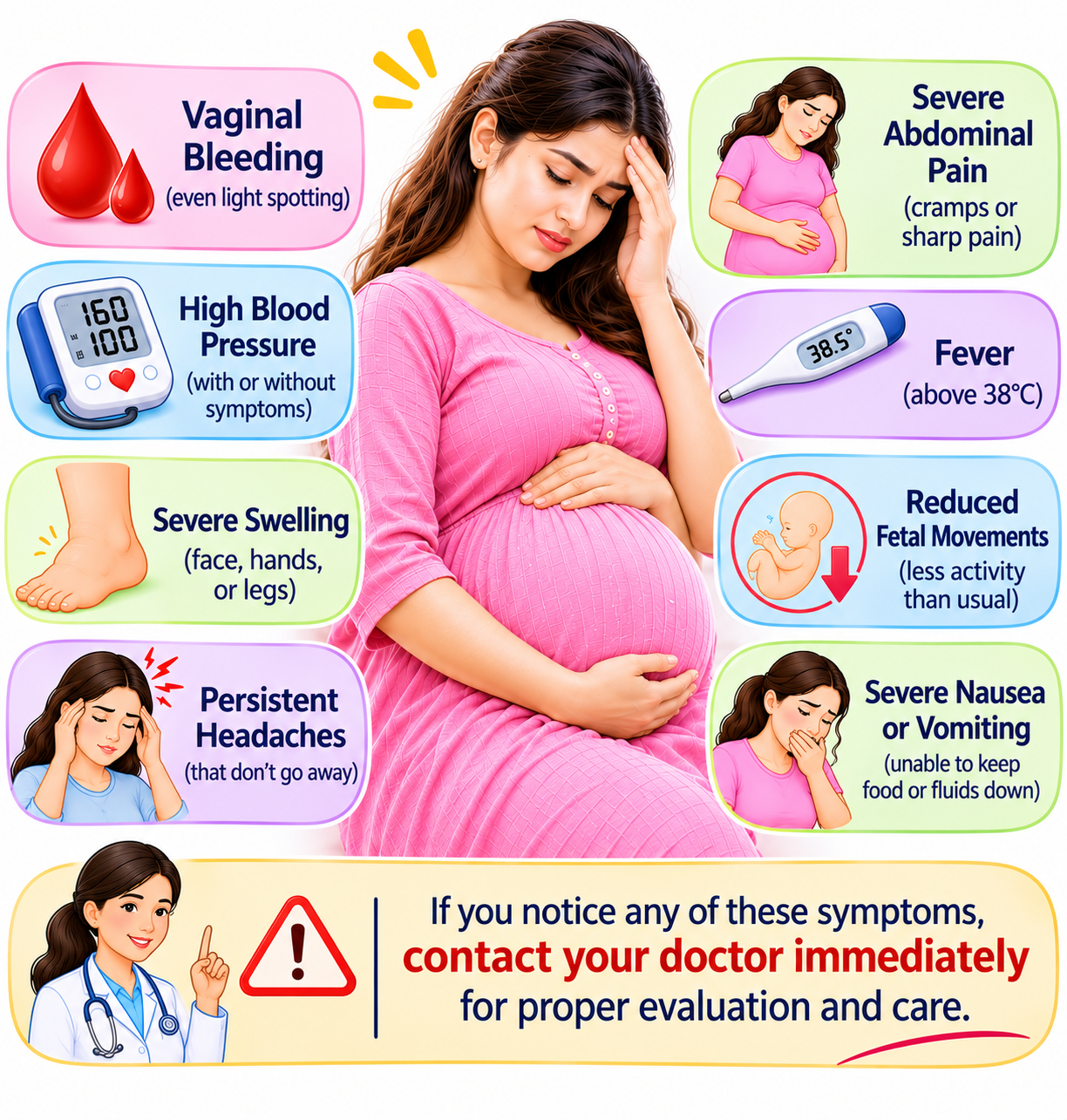
Some symptoms should be reported to the doctor on the same day, and a few require immediate hospital care.

  • Vaginal Bleeding – Bleeding beyond light spotting needs to be examined by a doctor. Heavy bleeding, or bleeding accompanied by pain in the abdomen, is an emergency and should not be managed at home.
  • Severe Headache with Swelling or Blurred Vision – When these occur together with sudden swelling of the face and hands, or pain below the ribs, they may indicate pre-eclampsia, a rise in blood pressure that can affect both the mother and the baby. It can develop within a day or two, so it should not be left for the next appointment.
  • Reduced Movement of the Baby – Once the baby’s movements are felt regularly, a clear reduction over a few hours should be checked on the same day. A baby that is moving less may not be receiving enough oxygen.
  • Leaking of Fluid or Early Contractions – A continuous leak of fluid, or tightening of the abdomen at regular intervals before 37 weeks, may mean that labour is beginning early. The time of onset should be noted and the hospital contacted without waiting to see if it settles.

The contact number of the obstetric team should be kept at hand, and a hospital with round-the-clock ICU and neonatal support is preferable when the symptoms are severe.

What Determines the Right Treatment Approach for a High-Risk Pregnancy?

Two women with a high-risk pregnancy can have quite different plans. The obstetrics and gynaecology team considers the following factors.

  • The Reason for the Risk – Age below 18 or above 35, twin pregnancy, a previous miscarriage or preterm birth, a low-lying placenta, diabetes and high blood pressure are among the common reasons. Each one has its own set of investigations, and a woman with two or three reasons is followed more closely.
  • Growth and Wellbeing of the Baby – Growth scans, Doppler studies of blood flow and tracing of the baby’s heartbeat show whether the baby is receiving adequate nourishment. If the growth slows, the schedule of visits and the plan for delivery are both reviewed.
  • Health of the Mother Through the Pregnancy – Blood pressure, blood sugar and weight are recorded at every visit, and blood and urine tests are repeated when needed. Medicines may be adjusted as the pregnancy advances, sometimes more than once.
  • Timing and Method of Delivery – In some women delivery is planned a few weeks before the due date, while others can wait for labour to begin on its own. The decision depends on the mother’s condition, the growth of the baby and the outcome of previous pregnancies.

Key Takeaways

  • Preparation for a high-risk pregnancy should begin with a doctor’s visit, preferably before conception, when medicines and existing conditions can still be adjusted.
  • Conditions such as diabetes, high blood pressure and thyroid disease should be well controlled, and no medicine should be stopped without medical advice.
  • Bleeding, a severe headache with visual changes, reduced movement of the baby and leaking of fluid need prompt medical attention.
  • The plan of care depends on the reason for the risk, so it differs from one woman to another.

FAQ

What makes a pregnancy high-risk?

Age below 18 or above 35, twins, a previous pregnancy loss, or a condition such as diabetes, high blood pressure or thyroid disease can make it high-risk

Can a high-risk pregnancy end in a normal delivery?

Yes, many women deliver normally. The mode of delivery depends on the reason for the risk and the condition of mother and baby at term.

How often are check-ups needed?

 Visits are more frequent than in routine care, usually every two to four weeks and weekly towards the end if the doctor advises.

Can I continue my regular medicines?

 Medicines should not be stopped on your own. Consult the doctor, as some are safe in pregnancy and others need to be changed.

Reference

Disclaimer

This article is for general education and does not replace advice from a qualified doctor. Please consult an obstetrician before making any decision about your pregnancy.


When Should You See a Cardiologist in Prayagraj?

When Should You See a Cardiologist in Prayagraj?

You should see a cardiologist when chest discomfort, breathlessness or palpitations carry on beyond a few days, or when you have risks such as diabetes, high blood pressure or a close relative with early heart disease. There is no need to wait for severe symptoms. An early check often shows a healthy heart, and when it does not, the problem is usually easier to treat.

According to the Medical Oncology Team at KNMH, cancer patients need the same attention. Some chemotherapy drugs and radiation to the chest can weaken the heart over time, so anyone treated in the past should tell the cardiologist at the first visit.

Not sure whether your symptoms need a heart check?

What Are the Signs You Need to See a Cardiologist?

Most of these symptoms have other causes too. The ones that last or keep returning are the ones to get examined.

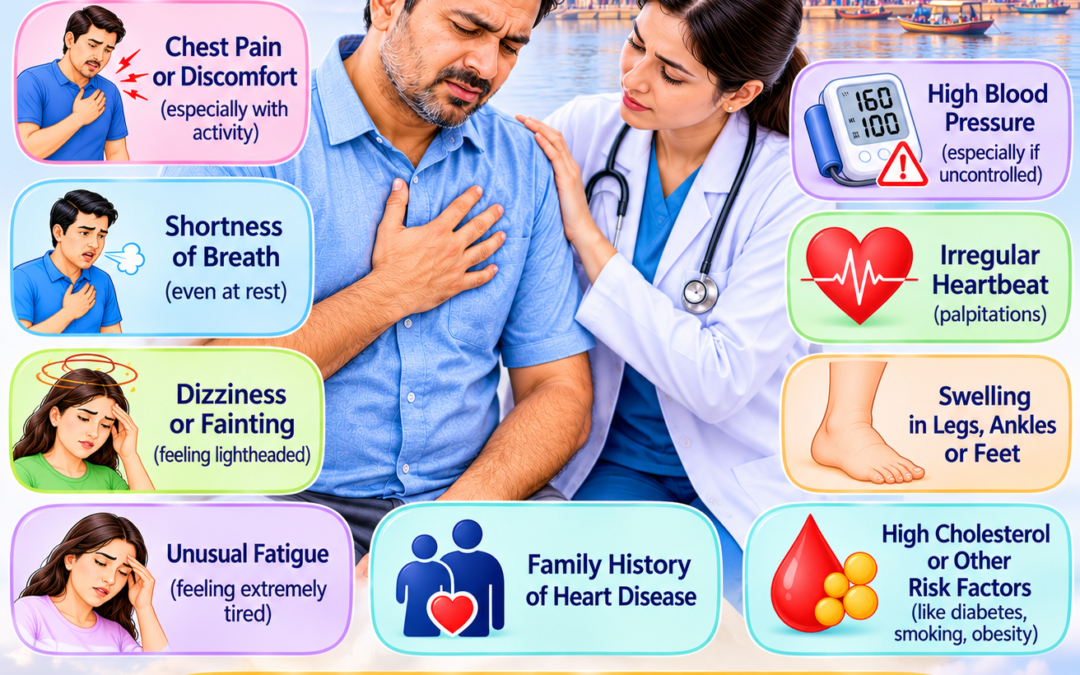
  • Chest Discomfort – A pressure or heaviness in the middle of the chest that appears on walking or climbing stairs and eases with rest is the classic pattern. It sometimes travels to the left arm or the jaw.
  • Breathlessness on Exertion – Struggling with a flight of stairs that was easy last year, or waking at night short of breath, needs checking. Many people blame age or weight and wait too long.
  • Palpitations or Fainting – A racing or skipping heartbeat, or a faint with no clear reason, may point to a rhythm problem. One brief episode is often harmless, but repeated ones call for an ECG.
  • Swollen Feet with Tiredness – Ankles that puff up by evening, together with fatigue out of proportion to the day’s work, can mean the heart is pumping weakly. Either one alone is less worrying than both together.

Chest pain lasting more than ten to fifteen minutes, especially with sweating or pain in the arm or jaw, is an emergency. Go to the nearest hospital instead of waiting for an appointment at the cardiology department.

When to Consult a Cardiologist Even Without Symptoms

Heart disease often builds quietly, so some people should be checked before anything feels wrong.

  • Diabetes, High Blood Pressure or High Cholesterol – Each of these damages the blood vessels slowly over the years. A person with two of them should have a yearly ECG and a lipid profile.
  • A Family History of Early Heart Disease – A father or brother with a heart attack before 55, or a mother or sister before 65, raises your own risk. Screening in such families often begins around 30 to 35.
  • Tobacco, Weight and Inactivity – Smoking or chewing tobacco, a large waistline and little daily activity add up over time. After 40, a heart check is sensible if more than one of these applies.
  • Past Cancer Treatment – Patients who have had chemotherapy or chest radiation can develop heart trouble months or even years later. A baseline check, with follow-up afterwards, picks up changes early.

People often search for the best cardiologist in Prayagraj. It is more useful to look at qualifications, experience with your particular condition, and whether the hospital can do an ECG, echocardiogram and stress test with emergency support available.

What Determines the Right Treatment Approach for Heart Problems?

Two patients with chest pain can need very different treatment.

  • Pattern of Symptoms – When the discomfort began, what brings it on and what relieves it help separate heart pain from acidity or a pulled muscle. This history often matters more than the first test.
  • Test Findings – An ECG, echocardiogram, treadmill test and blood tests show how the heart is working, and an angiogram may follow if a blockage is suspected. Many of these are done through the hospital’s diagnostic departments.
  • Other Illnesses and Medicines – Diabetes, kidney disease and the tablets a patient already takes decide what is safe to prescribe. A history of cancer treatment is kept in mind as well.
  • Medicines, Procedure or Lifestyle – Many patients do well on tablets with changes in diet and activity, while some need angioplasty or surgery. The choice depends on the findings, the patient’s age and general health.

Key Takeaways

  • See a cardiologist when chest discomfort, breathlessness, palpitations or swelling lasts or keeps returning, even if it is mild.
  • With diabetes, high blood pressure, high cholesterol, a family history or past cancer treatment, a check-up makes sense before symptoms begin.
  • Chest pain beyond ten to fifteen minutes, with sweating or pain in the arm, needs emergency care.
  • When choosing a cardiologist, look at qualifications, experience, and the tests and emergency support the hospital offers.

FAQ

When should I see a cardiologist for chest pain?

 If it keeps recurring, comes on with effort or lasts more than a few minutes. Severe pain with sweating is an emergency.

Do I need a heart check-up if I feel fine?

 Yes, if you have diabetes, high blood pressure, high cholesterol or a family history of early heart disease, or you are past 40 with other risks.

What tests are done at the first visit?

 Usually an ECG and a blood pressure check, then an echocardiogram, stress test or blood tests if needed.

How do I choose a good cardiologist?

Check qualifications and experience, and make sure the hospital offers the tests and emergency support you may need.

Reference

Disclaimer:

This article is for general education and does not replace advice from a qualified doctor. Please consult a cardiologist before making any decision about your heart health.

How Common Is Childhood Cancer in India Today?

How Common Is Childhood Cancer in India Today?

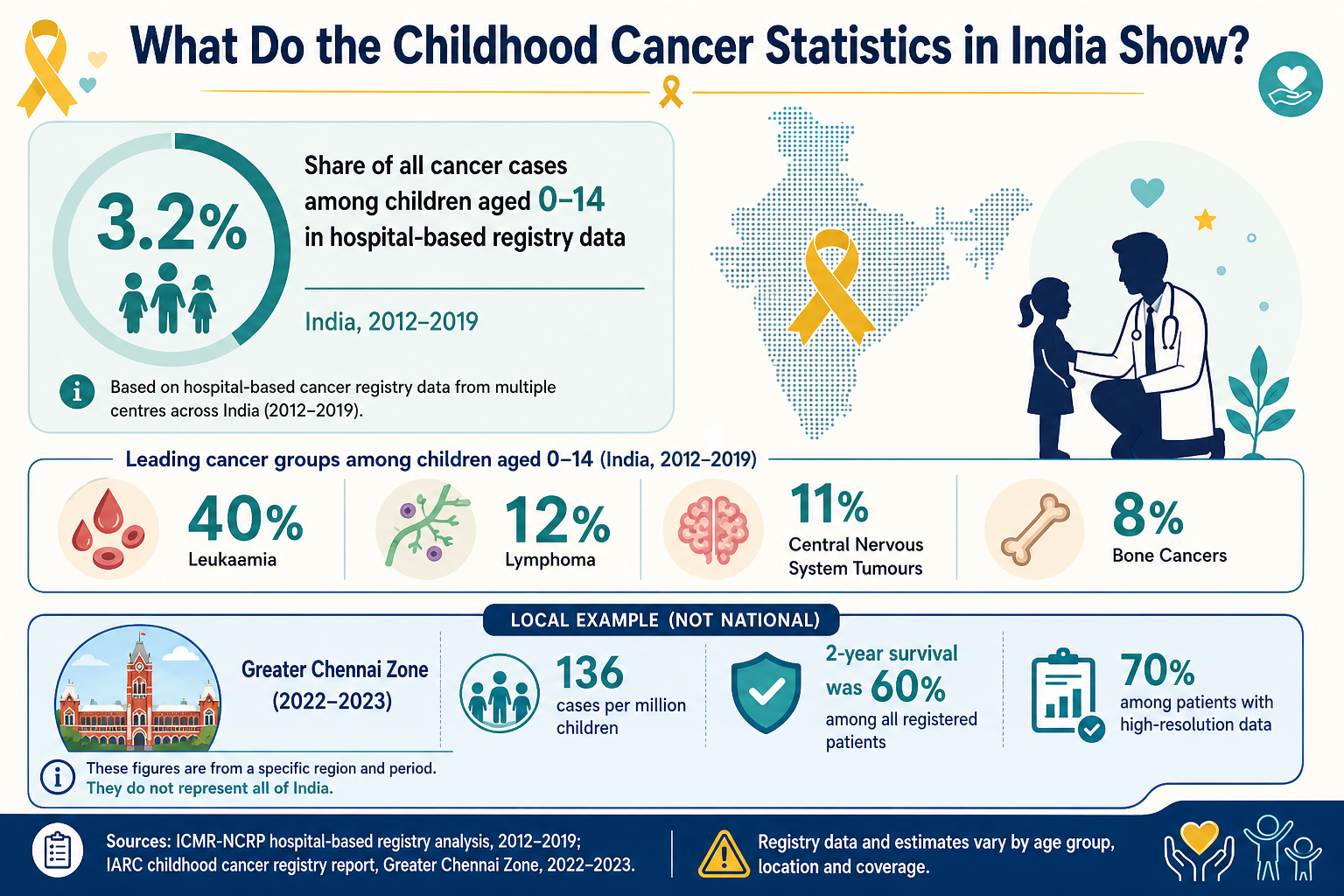
Cancer in children is uncommon. It makes up only about 3 to 5 percent of all cancers found in India. The country’s population is so large, however, that it still has more affected children than any other nation, close to one in five of all childhood cases worldwide. These cancer statistics look small as a percentage and heavy as a headcount.

According to the Medical Oncology Team at KNMH, the small percentage leads some parents to feel that cancer in a child is too rare to worry about. A fever that keeps returning, a swelling that does not settle, or a child who has stopped wanting to play deserves an examination and a blood test, not another week of waiting at home.

Wondering what tests are done when a child is suspected of having cancer?

What Do the Childhood Cancer Statistics in India Show?

Exact figures are hard to pin down, but the broad picture is consistent.

  • A Small Share of All Cancers – Out of every hundred cancers diagnosed in the country, only three to five occur in children. The rest are in adults, which is why hospitals see so many more of them.
  • A Large Share of the World’s Cases – India has one of the biggest child populations anywhere, so it accounts for roughly a fifth of childhood cancers globally. Estimates run to tens of thousands of new cases a year.
  • The Usual Types – Leukaemia is the commonest. Lymphomas and tumours of the brain and spinal cord follow, and in younger children kidney and eye tumours are seen.
  • Gaps in the Records – Cancer registries cover only parts of the country, and many children in villages are never recorded. Part of the reason is that fewer families live near a Regional Cancer Centre, so the true number is probably higher than the published one.


Which Warning Signs Should Parents Take Seriously?

Most of these signs have ordinary causes. What matters is that they last.

  • Fever and Paleness – A fever that comes back without an infection to explain it, a child who looks washed out, or bruises and nosebleeds with no injury behind them can point to leukaemia.
  • A Lump or Swelling – A lump in the neck, groin or armpit that does not hurt and does not shrink should be examined. A belly that looks swollen in a thin child needs the same attention.
  • Morning Headache and Vomiting – Headaches that are worst on waking and end in vomiting, together with unsteady walking or a squint that is new, can be signs of a brain tumour.
  • Bone Pain and a Changed Eye – A child who limps or wakes at night with bone pain needs a scan. A white glint in the pupil in photographs is a classic sign of an eye tumour, so show it to a paediatrician quickly.

When symptoms persist, tests settle the question. Our post on how cancer is diagnosed step by step explains what to expect.

What Determines the Right Treatment Approach for Childhood Cancer?

What Determines the Right Treatment Approach for Childhood Cancer?

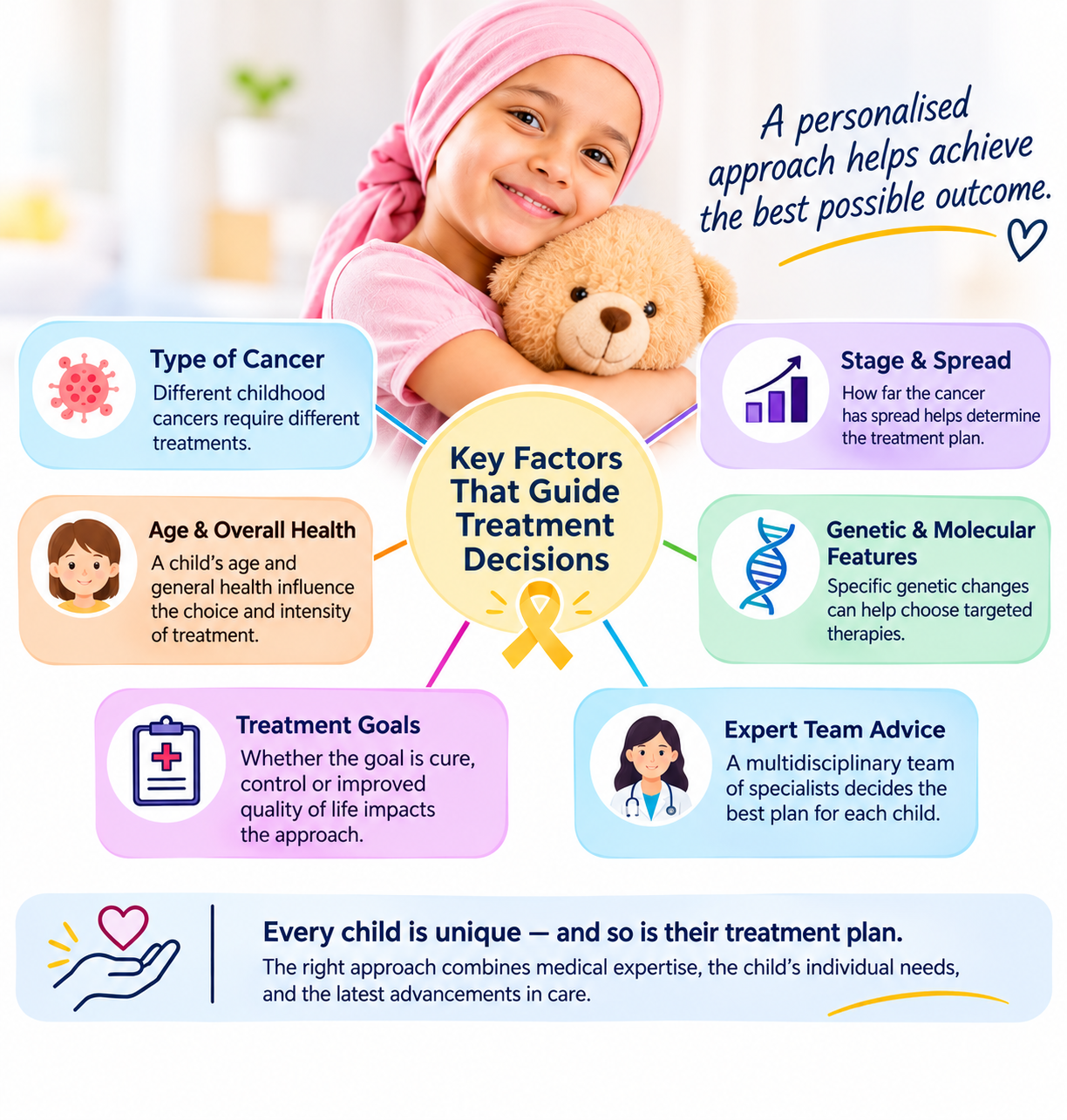
Children are not small adults, and their plans are built accordingly.

  • Type and Stage – Leukaemia is treated mainly with chemotherapy given over many months. A solid tumour may need surgery first, with chemotherapy or radiation around it.
  • Age and Body Size – Drug doses are worked out from the child’s weight and height. In very young children, radiation is avoided where possible because it can affect growth.
  • How the Child Responds – Blood counts and scans decide whether to continue, reduce or change the plan. The first plan is rarely the last.
  • Family Circumstances – Treatment can mean repeated admissions over a year or more. Distance from the hospital, a caregiver able to stay, and cost all count, and parents can read whether Ayushman Bharat covers cancer treatment.

Key Takeaways

  • Childhood cancer is only 3 to 5 percent of cancers in India, but the country has the largest number of affected children in the world.
  • Leukaemia is the commonest type, followed by lymphomas and brain tumours.
  • Symptoms that last more than a couple of weeks should be examined, not watched.
  • Many children recover fully, especially when the cancer is found early and treated at a proper centre.

FAQ

Is cancer common in children in India?

 No. It is rare in any single child, but India’s large population gives it the highest number of cases worldwide.

Which cancer is most common in children?

 Leukaemia, which starts in the blood and bone marrow, is the commonest.

Can childhood cancer be cured?

 Many children are cured, particularly when the disease is found early. The outcome depends on the type and stage.

Does childhood cancer run in families?

 Rarely. Most cases have no family link, though a small number are tied to inherited conditions.

Reference


Disclaimer
This article is for general education and does not replace advice from a qualified doctor. Please consult a specialist before making any decision about your child’s health.

What Is Palliative Care and Who Really Needs It?

What Is Palliative Care and Who Really Needs It?

Palliative care is a specialised area of medicine that focuses on easing the pain, symptoms and emotional strain that come with a serious or long-term illness. Its purpose is to improve quality of life for the patient and for the family. It is given alongside curative treatment and can begin at any stage of the illness, not only toward the end.

According to the Medical Oncology Team at KNMH, palliative care is often mistaken for a last resort, when it works best if introduced early. Patients who receive symptom support from the time of diagnosis usually tolerate treatment better and can take part in decisions about their own care with a clearer mind.

Unsure whether palliative care applies to your family member?

What Does Palliative Care Include?

It is delivered by a team, and the plan is built around four areas.

  • Symptom Control – Pain, breathlessness, nausea, constipation, poor appetite and disturbed sleep are treated actively, with doses adjusted as the illness changes.
  • Emotional Support – Anxiety, low mood and fear are common in serious illness, and counselling with the care team addresses them directly.
  • Family Guidance – Relatives are shown how to manage nursing needs at home, what changes to expect and when to call for help.
  • Care Coordination – One team keeps the oncologist, physiotherapist, dietitian and nurses working to the same plan, so the patient does not repeat their history at every visit.

    Where pain comes from a tumour pressing on bone or nerve, palliative radiotherapy is sometimes used to shrink it and bring relief.

Who Needs Palliative Care?

The need depends on symptoms and quality of life, not on how much time is left. Four groups are referred most often.

  • Advanced or Recurrent Cancer – Pain, fatigue and treatment side effects tend to build up and need dedicated management.
  • Chronic Organ Failure – Advanced heart, lung, kidney or liver disease brings breathlessness, swelling and repeated hospital stays.
  • Neurological Illness – Stroke, advanced dementia and Parkinson’s disease place long-term demands on both the patient and the caregiver.
  • Symptoms That Stay Uncontrolled – Anyone whose pain or distress is not settling with usual treatment can be referred, whatever the diagnosis.

    Palliative care for serious illness does not mean treatment has been given up. How far a cancer can be controlled is a separate question, covered in our post on whether cancer can be cured completely.

What Determines the Right Treatment Approach for Palliative Care?

No two plans look alike. The care team weighs four things before deciding.

  • Type and Stage of Illness – This indicates which symptoms are likely and how quickly they may change.
  • Symptom Burden – The symptom that troubles the patient most is treated first.
  • The Patient’s Own Goals – Some patients want to stay alert and at home, while others accept more drowsiness for better pain relief, and the plan follows their wishes.
  • Family and Financial Circumstances – Caregiver availability, the home setup and treatment costs decide what is realistic.

Families concerned about expenses can read whether Ayushman Bharat covers cancer treatment.

Key Takeaways

  • Palliative care eases symptoms and stress in serious illness and can run alongside curative treatment.
  • It can begin at any stage, including soon after diagnosis.
  • Need is judged by symptoms and quality of life, not by prognosis.
  • The benefits of palliative care extend to the family through guidance and emotional support.

FAQ

Is palliative care the same as hospice care?

 No. Palliative care can start at any stage alongside treatment, while hospice care is meant for the final phase of life.

Does palliative care mean stopping cancer treatment?

 No. It runs alongside chemotherapy, radiation or surgery and helps patients tolerate them.

When should palliative care be started?

 Once symptoms or stress begin to affect daily life, often soon after a serious diagnosis.

Who provides palliative care?

 A team of doctors, nurses, counsellors, physiotherapists and dietitians working together.

Reference

Disclaimer: This article is for general education and does not replace advice from a qualified doctor. Please consult a specialist before making any decision about treatment.

How Does Radiation Therapy Work for Cancer?

How Does Radiation Therapy Work for Cancer?

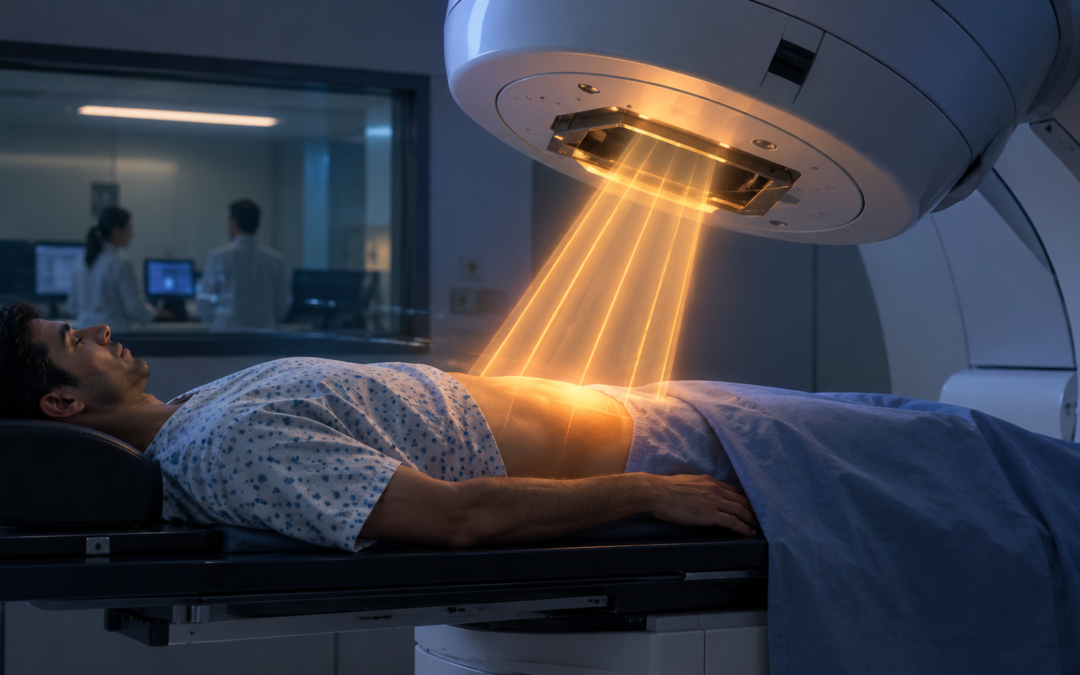
High-energy beams. That’s radiation therapy in one line. Aimed straight at the tumour, calibrated to kill cancer cells while sparing as much healthy tissue around it as physically possible. Comes external, machine outside the body, or internal, source placed right at the tumour site. Sessions run daily, five days a week usually, for weeks at a stretch. Sounds harsh. Isn’t, not in the room. Every beam gets mapped down to the millimetre before it’s ever used.

According to the Medical Oncology Team at KNMH, radiation therapy isn’t one-size treatment, the dose and angle get planned fresh for every single patient’s anatomy. Same cancer, different body, different plan.

Not sure if radiation’s even the right call for your case?

What Happens Before Radiation Therapy Starts?

Before the first beam even fires, there’s a whole mapping stage. Skip that, and nothing after it works right.

  • CT Simulation – Patient lies exactly how they will for every real session, and a CT scan maps the tumour’s precise location, down to the millimetre.
  • Custom Moulds – Need to stay still for treatment? A mould or mask gets made, body-specific, so the same position repeats every single time.
  • Dose Planning – This is where physicists and oncologists sit together and work out angles, beam strength, session count, all of it mapped on a computer first.
  • Marking – Tiny tattoo dots, sometimes just marker. Sounds small. Keeps every session lined up exactly right, week after week.

Get this stage wrong and the whole treatment suffers. That’s why planning at radiation oncology takes days, sometimes longer, before anyone gets treated.

What Happens During and After Radiation Sessions?

Actual treatment day? Quick. Mapping did the hard part already.

  • Daily Sessions – Ten, fifteen minutes, most of it just positioning. The beam itself runs for seconds at a time, several angles, one after another.
  • No Pain – Feel anything during it? No. Radiation’s painless in the room, it’s the days after where fatigue and skin changes show up.
  • Skin Reaction – Redness, dryness, sometimes peeling, right where the beam entered. Sunburn-like. Usually shows up a couple weeks in.
  • Follow-Up Scans – Weeks after the last session, imaging checks how the tumour responded. Results don’t show up instantly. That’s just how radiation works.

How much radiation gets used, and for how long, comes straight back to cancer staging done right at diagnosis.

Why Choose KNMH For Cancer Treatment?

Kamala Nehru Memorial Hospital’s had LINAC-based radiation running for years now, external beam, image-guided, the works. Regional Cancer Centre tag since 1994, Government of India.

Same building handles the CT mapping, the planning, the actual sessions. Nobody’s shuttling between centres here. Call 9918802141, get the case looked at.

FAQ

Does radiation therapy hurt during the session?

No, the treatment itself is completely painless in real time.

How long does a full radiation course usually take?

Anywhere from one to eight weeks, depending on the cancer.

Can radiation therapy be combined with chemotherapy?

Yes, many regimens use both together for stronger combined results.

Does radiation therapy affect healthy tissue nearby?

Some exposure happens, but modern planning minimizes it significantly.

Reference

Disclaimer: This blog is for general information only and does not replace professional medical advice; transplant eligibility depends entirely on individual diagnosis and health status.
Powered by Joinchat
Call Now Button