


This website is being reviewed and updated in line with the National Medical Commission (NMC) guidelines on ethical advertising and public communication by registered medical practitioners.
Kamala Nehru Memorial Hospital Regional Cancer Centre logo with two white silhouettes on blue and 'Estd: 1941' text.
NABH
What Are the Warning Signs of Cervical Cancer?

What Are the Warning Signs of Cervical Cancer?

Abnormal bleeding is the clearest warning sign, and it shows up more than one way. Between periods. After sex. After menopause, when there’s supposed to be none left at all. Discharge changes too, watery, bloody, smells off. Pain during sex, count that in as well. Later stage? Pelvic pain that won’t quit, weight dropping for no reason, legs swelling up. Look, most of this gets called “just periods” or “just age.” It isn’t. Not always.

According to the Medical Oncology Team at KNMH, cervical cancer symptoms get missed longer than almost any other cancer’s. Blame goes to periods first. Cancer, last. That’s where people get lazy.

Bleeding that doesn’t match your cycle?

What Are the Early Warning Signs of Cervical Cancer?

Early on? Barely anything shows. That’s the whole problem.

  • Abnormal Bleeding – Between periods, after sex, past menopause? Any of it counts, and none of it should get waved off as bad luck.
  • Unusual Discharge – Watery, bloody, foul-smelling, changed from what’s normal for you. Comes and goes, maybe. Still worth flagging.
  • Pelvic Pain – Dull ache low down, or sharp during sex. Doesn’t matter which, both are signals worth listening to.
  • Longer Periods – Heavier, longer, month after month now? That’s not “getting older.” That’s a pattern.

None of this confirms cancer by itself. But that’s exactly why a gynaecology check beats guessing, every time.

What Are the Later Warning Signs of Cervical Cancer?

Later stage, and the body stops whispering.

  • Persistent Pain – Low back, pelvis, sometimes down the legs. Constant now, not the occasional twinge from before.
  • Weight Loss – Dropping weight, fast, no diet change, no explanation? Take that one seriously.
  • Leg Swelling – One leg, sometimes both, heavy, swollen, sometimes painful. Tumour pressing on something nearby, usually.
  • Fatigue – Tired in the bones. Sleep doesn’t touch it. Sounds vague, sure. Stack it with everything else on this list though, and it isn’t.

Symptoms this late rarely show up solo, they stack. Worth reading how early signs get missed just as often, across cancers generally.

Why Choose KNMH For Cancer Treatment?

Kamala Nehru Memorial Hospital’s Regional Cancer Centre tag goes back to 1994. Government of India, official. Gynaeco-oncology, radiation, medical oncology, same building. Not five referrals across town.

Catch cervical cancer early and it’s one of the more treatable ones out there. That’s the whole reason screening gets pushed so hard here.

Call 9918802141 to book your appointment.

FAQ

Can cervical cancer be detected without symptoms?

Yes, regular Pap smears catch changes long before symptoms appear.

Is bleeding after menopause always cancer?

No, but it always needs a doctor’s evaluation right away.

Does HPV always cause cervical cancer?

No, most HPV infections clear on their own without becoming cancer.

At what age should cervical cancer screening start?

Screening typically starts around age 21 to 25, as per guidelines.

Reference

Disclaimer: This blog is for general information only and does not replace professional medical advice; transplant eligibility depends entirely on individual diagnosis and health status.

What Happens During Chemotherapy at KNMH?

What Happens During Chemotherapy at KNMH?

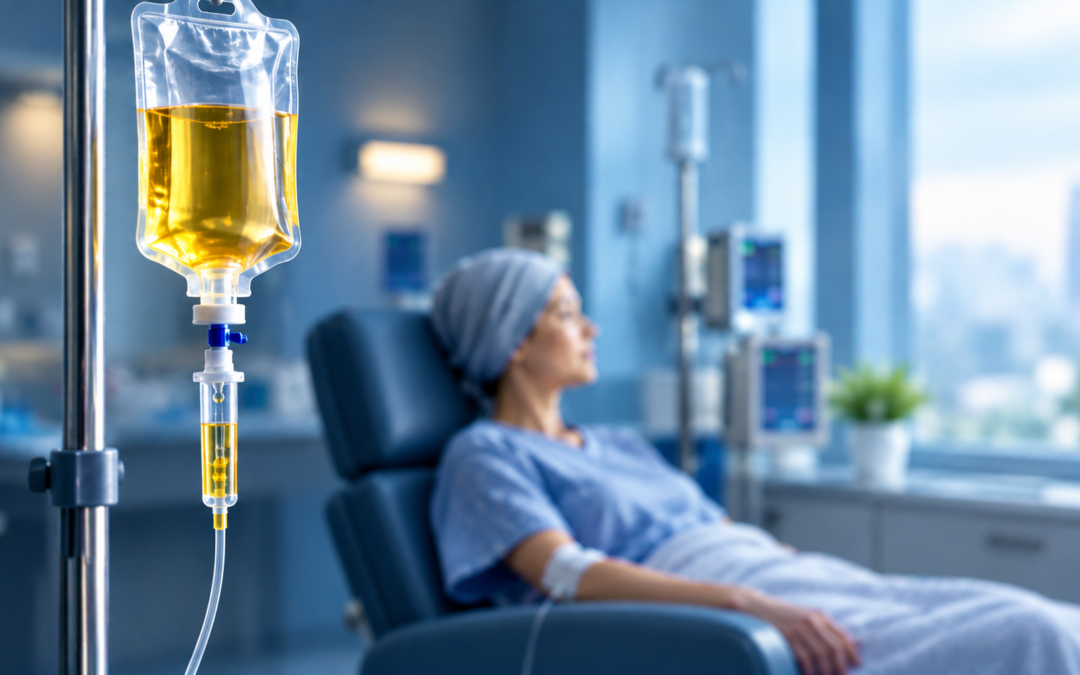
Chemo stops cancer cells from dividing. That’s the whole point of it. Comes as an IV drip, a jab, sometimes just tablets, depends on the cancer. Walk in, get registered, blood drawn, oncologist signs off that you’re fit for that day’s dose, then the drug goes in, then you’re watched before anyone lets you leave. Thirty minutes on the short end, six hours on the long one. Cycles land every one to four weeks. Nothing here is a guess. Every dose gets built around what your blood looks like that morning, not what it looked like last month.

According to the Medical Oncology Team at KNMH, chemotherapy doses don’t get fixed once and left alone, they get recalculated before every single cycle. Blood counts move. Kidneys move. So the dose moves too.

Not sure your body’s ready for another chemotherapy yet?

What Happens Before the First Chemotherapy Session?

Before any drug goes in, a few boxes have to get ticked. No shortcuts.

  • Blood Work – Fresh blood every time. Counts checked, kidneys checked, liver checked. Something’s off? The whole schedule waits, simple as that.
  • Port Placement – Long regimen ahead? Then a port or central line usually goes in first, saves the smaller veins from getting punctured over and over.
  • Consent Review – This is where the oncologist actually talks. Side effects, drug names, how long the whole thing runs, and questions get answered right here, not after the drip’s already going.
  • Pre-Medication – Anti-nausea, anti-allergy, both go in roughly thirty minutes before the real drug starts. Skip this part and the first hour turns rough, fast.

So yeah, prep matters more than people give it credit for. And most of it sits with the medical oncology team, who also decide whether it’s a same-day chair or an actual admission.

What Happens During and After Each Chemo Cycle?

Drip starts, and now it’s about watching. Not guessing.

  • Drug Sequence – Order matters here, a lot. Give two drugs the wrong way round and you either weaken them or make them meaner than they need to be.
  • Vitals Check – Blood pressure, pulse, oxygen, checked every fifteen to twenty minutes through the whole drip. Any reaction at all? It stops right there.
  • Recovery Window – Last drug’s in, but nobody’s walking out yet. Short observation window first, just to catch anything that shows up late.
  • Follow-Up Test – Comes back about a week later, mostly for one thing, a repeat blood count. That’s when numbers usually crash and infection risk climbs.

Healing happens in between cycles, honestly, not just in the chair. Because patients who actually understand how their cancer diagnosis shaped this particular regimen tend to stick with the schedule better.

Why Choose KNMH For Cancer Treatment?

Kamala Nehru Memorial Hospital’s been running Medical Oncology and BMT since 1994, Government of India-recognised Regional Cancer Centre, tag and all. Day-care chemo, targeted therapy, immunotherapy, all under one roof. Decades of high patient volume at low cost means these protocols are tested. Not improvised. Same team handling your scans handles your chemo, handles your follow-up too. Nothing slips between departments here, that’s the whole point.

Call 9918802141 to book your consultation.

FAQ

How many chemotherapy cycles are usually needed?

It depends entirely on cancer type, stage, and treatment response.

Can chemotherapy start on the same day as diagnosis?

No, baseline blood work and organ function tests come first.

Does chemotherapy always require hospital admission?

Not always, many regimens run as day-care infusions without admission.

What happens if blood counts are too low for chemo?

The cycle gets postponed until counts recover to a safe range.

Reference

Disclaimer: This blog is for general information only and does not replace professional medical advice; transplant eligibility depends entirely on individual diagnosis and health status.

Choosing a Cancer Hospital in Prayagraj –  What KNMH Offers That Others Don’t ?

Choosing a Cancer Hospital in Prayagraj –  What KNMH Offers That Others Don’t ?

Kamala Nehru Memorial Hospital has been Prayagraj’s Regional Cancer Centre since 1994, recognised formally by the Government of India. The 16.6-acre campus runs 400 beds, sees over 1.68 lakh patients a year, and covers Medical Oncology, Radiation Oncology, Surgical Oncology, Nuclear Medicine, and Bone Marrow Transplant on a single campus. For patients across eastern Uttar Pradesh, that combination under one roof is still genuinely rare.

According to a Senior Radiation Oncologist at KNMH, a leading cancer centre in Prayagraj,                               “Patients travelling long distances for cancer care often arrive at advanced stages. Having a Regional Cancer Centre closer to home directly changes what treatment is still possible – and what isn’t.”

Take the first step toward recovery with KNMH, the top cancer centre in Prayagraj. 

What should you actually look for in a cancer hospital?

Families making this decision are often doing it fast, under pressure, and with incomplete information. Four things actually matter clinically. Everything else is marketing.

  • Government recognition vs self-declaration: The Regional Cancer Centre tag from the Government of India requires passing real infrastructure and outcome benchmarks not a certificate printed off a website. KNMH has held it since 1994, among the earliest RCCs in Uttar Pradesh. Families searching for the best cancer hospital in Prayagraj should verify this credential first.
  • Full treatment on one campus: Surgery, chemotherapy, and radiation in the same building. Every mid-treatment facility shift causes delays, records slip, and cycles get missed. KNMH handles all three without sending patients elsewhere.
  • Cancer-specific wards: A dedicated Adult Leukaemia and Lymphoma Ward runs separately from general oncology, giving immunocompromised patients the clinical separation they need, something most smaller-city hospitals haven’t built.
  • Follow up the hospital runs, not the patient: KNMH’s Medical Oncology department uses a zero lost-to-follow-up model that tracks patients between cycles, closing the gaps where outcomes quietly worsen.

Finishing a six-cycle treatment plan matters more than starting an eight-cycle one. Cost and distance decide which families complete treatment and which don’t.

Why patients from across eastern UP come to KNMH ?

Thirty years of continuous oncology practice builds something you can’t shortcut. Here’s what it actually produces.

  • RCC recognition since 1994: KNMH earned its Regional Cancer Centre designation while most UP hospitals were still building general wards. The protocols, teams, and infrastructure here reflect three decades of refinement, backed by the legacy of the KNMH Trust not a recently assembled oncology unit.
  • Complete treatment, no referrals out: Chemotherapy, targeted therapy, immunotherapy, precision radiotherapy, and surgical tumour removal are all active on campus. Patients with complex or multi-stage cases aren’t sent elsewhere for parts the hospital can’t manage because there aren’t many it can’t.
  • Bone Marrow Transplant: BMT needs specialised infrastructure, trained haematology teams, and isolation protocols most regional UP hospitals haven’t built. KNMH has it, alongside a dedicated Adult Leukemia and Lymphoma Ward. That’s not common.
  • Nuclear Medicine on campus: In-house radioactive tracer imaging for diagnosis and treatment requiring major investment and regulatory clearance is something most eastern-UP hospitals lack. KNMH runs the full range, from Radiation and Surgical Oncology to Nuclear Medicine and Paediatric Oncology.

Gandhi founded this hospital in 1941 personally collecting donations for it because cancer patients in this region had nowhere else to go. Eighty years later, the not-for-profit structure, the subsidised pricing, and the follow-up model still reflect that.

Why Choose Kamala Nehru Memorial Hospital ?

The oncology team at KNMH includes senior specialists across Radiation Oncology, Surgical Oncology, Medical Oncology, and Paediatric Oncology, each with years of dedicated clinical practice at a Government of India-recognised Regional Cancer Centre. KNMH is NABH-accredited, not-for-profit, and runs a 400-bed campus across 16.6 acres in Prayagraj, serving over 1.68 lakh patients a year since 1941.

FAQ

Is KNMH a government-recognised cancer hospital?

Yes, KNMH has been a Government of India-recognised Regional Cancer Centre since 1994.

Does KNMH offer chemotherapy and radiation therapy on the same campus?

Yes, chemotherapy, radiation oncology, and surgical oncology are all available without referrals to outside facilities.

Is cancer treatment at KNMH affordable for low-income patients?

Yes, KNMH operates as a not-for-profit hospital and offers subsidised cancer treatment to patients who can’t afford standard pricing.

Does KNMH treat paediatric cancer patients?

Yes, KNMH has a dedicated Paediatric Oncology Ward with specialised protocols for children and adolescents.

Powered by Joinchat
Call Now Button