

Preparation for a high-risk pregnancy involves regular consultation with an obstetrician, control of any existing medical condition, and a schedule of check-ups and scans that is more frequent than in a routine pregnancy. This is best started before conception, although it remains useful at any stage once the pregnancy is confirmed. The extra monitoring is meant to identify a problem early, while it can still be managed with simple measures.
According to the Medical Oncology Team at KNMH, a high-risk label does not mean that a complication is certain. It means that the pregnancy requires closer follow-up. Women who have previously received cancer treatment, or who are diagnosed with cancer during pregnancy, are an example, since the oncologist and the obstetrician need to plan the care together.
Planning a pregnancy with a health condition?
What Are the Best High-Risk Pregnancy Preparation Tips?
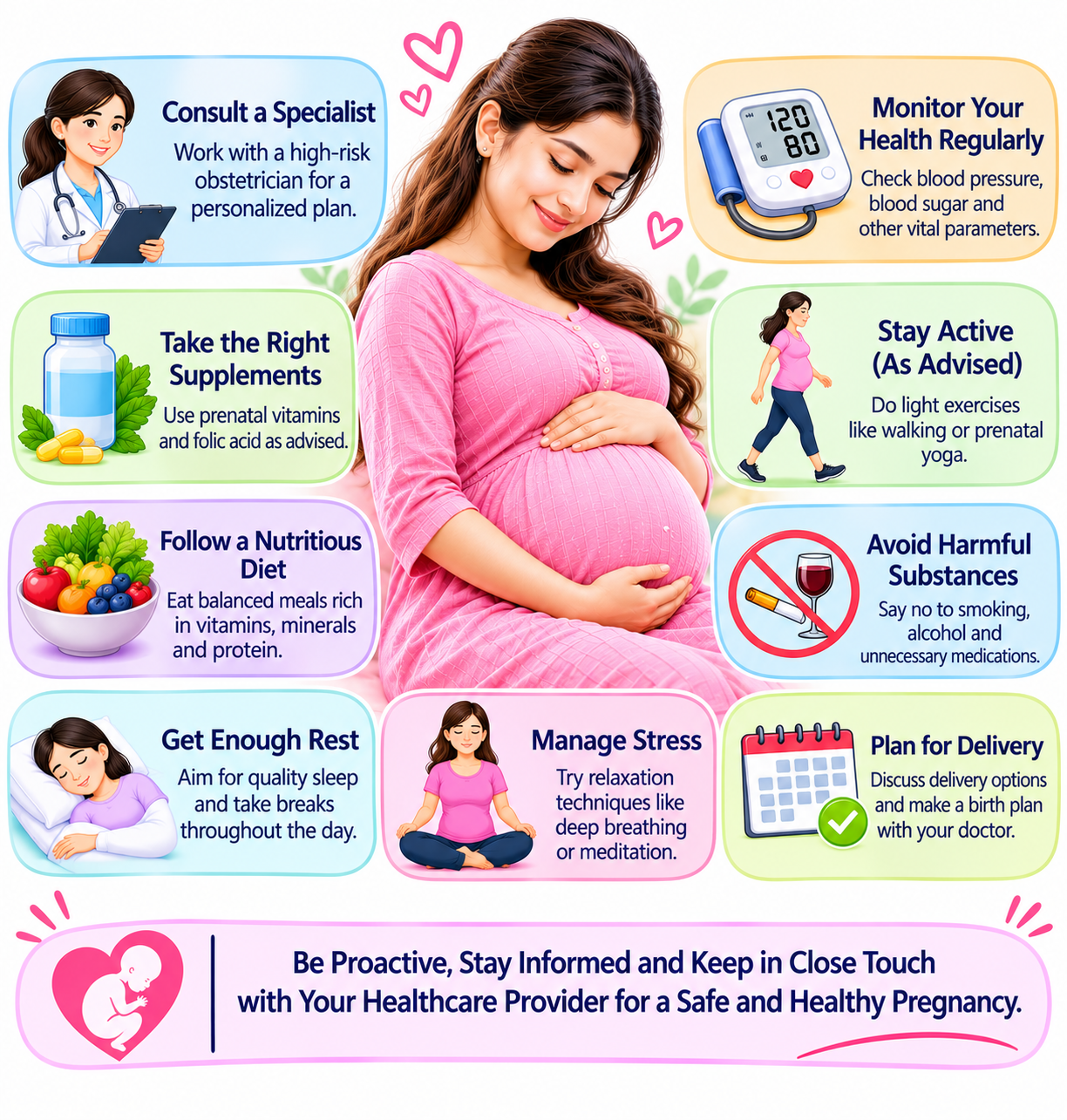
These steps are simple, and they are most effective when they are started early and followed regularly.
- Consult the Doctor Before Conceiving – A pre-pregnancy visit allows the doctor to review blood sugar, blood pressure, thyroid function and body weight, and to replace any medicine that is not safe in pregnancy. Regular medicines should not be stopped without medical advice, since stopping some of them can be more harmful than continuing them. The visit also gives the couple a chance to ask what the pregnancy is likely to involve.
- Control Existing Medical Conditions – Diabetes, high blood pressure, thyroid disease, epilepsy and kidney or heart disease are easier to manage in pregnancy when they are well controlled at the time of conception. Even a few weeks of stable control can make a difference to the pregnancy, and the doctor may repeat certain tests to confirm it.
- Attend Diet and Lifestyle – Folic acid should be taken as advised, and meals should include enough protein and iron. Tobacco and alcohol are best avoided completely, and vaccinations should be updated early because some cannot be given once pregnancy has begun.
- Choose the Place of Delivery in Advance – The hospital should have a blood bank, round-the-clock obstetric cover and a newborn intensive care unit. A transfer during labour is difficult for both mother and baby, so it helps to visit the hospital beforehand and to know how long the journey takes at night.
What Are the High-Risk Pregnancy Symptoms to Watch For?
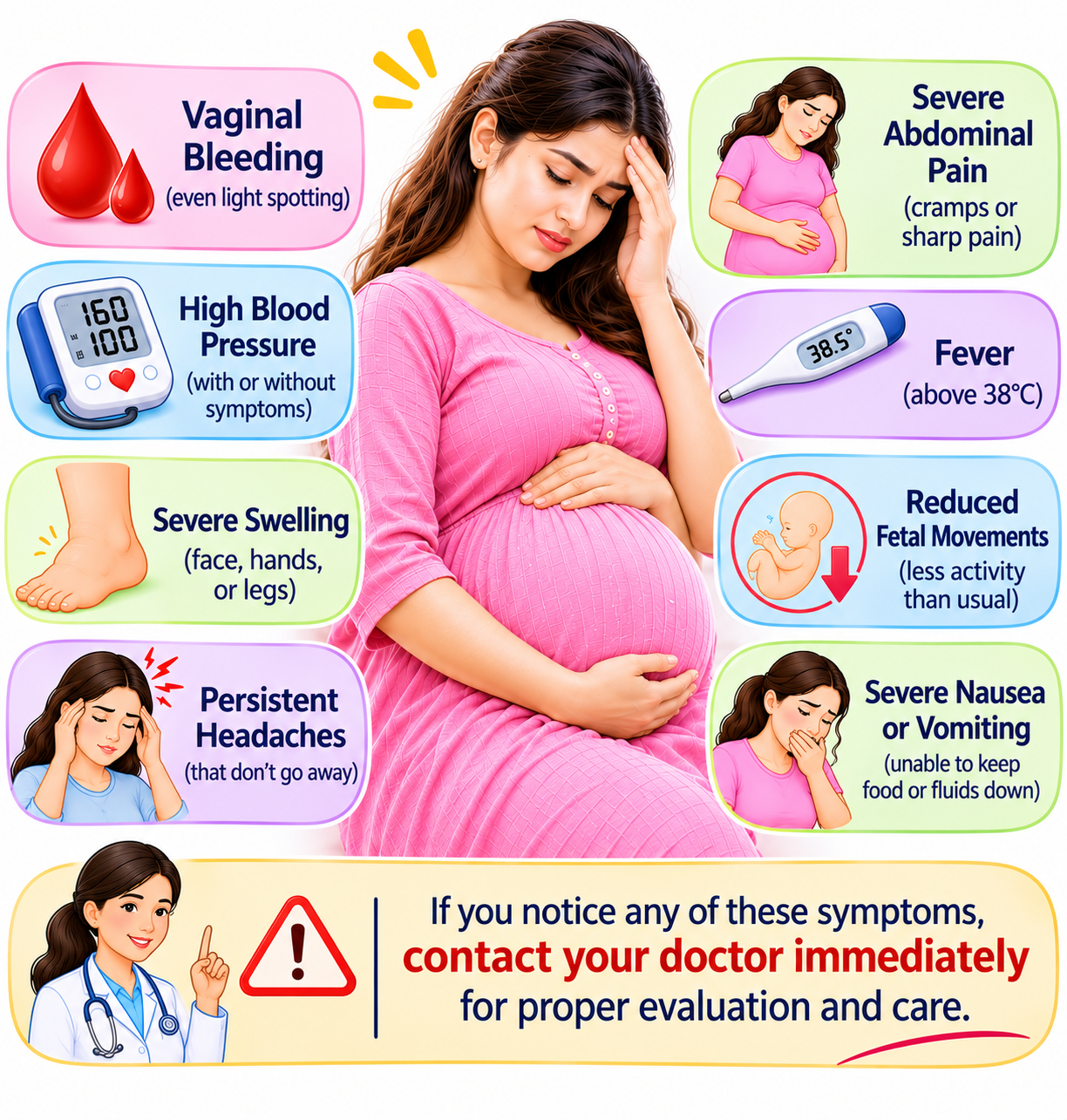
Some symptoms should be reported to the doctor on the same day, and a few require immediate hospital care.
- Vaginal Bleeding – Bleeding beyond light spotting needs to be examined by a doctor. Heavy bleeding, or bleeding accompanied by pain in the abdomen, is an emergency and should not be managed at home.
- Severe Headache with Swelling or Blurred Vision – When these occur together with sudden swelling of the face and hands, or pain below the ribs, they may indicate pre-eclampsia, a rise in blood pressure that can affect both the mother and the baby. It can develop within a day or two, so it should not be left for the next appointment.
- Reduced Movement of the Baby – Once the baby’s movements are felt regularly, a clear reduction over a few hours should be checked on the same day. A baby that is moving less may not be receiving enough oxygen.
- Leaking of Fluid or Early Contractions – A continuous leak of fluid, or tightening of the abdomen at regular intervals before 37 weeks, may mean that labour is beginning early. The time of onset should be noted and the hospital contacted without waiting to see if it settles.
The contact number of the obstetric team should be kept at hand, and a hospital with round-the-clock ICU and neonatal support is preferable when the symptoms are severe.
What Determines the Right Treatment Approach for a High-Risk Pregnancy?
Two women with a high-risk pregnancy can have quite different plans. The obstetrics and gynaecology team considers the following factors.
- The Reason for the Risk – Age below 18 or above 35, twin pregnancy, a previous miscarriage or preterm birth, a low-lying placenta, diabetes and high blood pressure are among the common reasons. Each one has its own set of investigations, and a woman with two or three reasons is followed more closely.
- Growth and Wellbeing of the Baby – Growth scans, Doppler studies of blood flow and tracing of the baby’s heartbeat show whether the baby is receiving adequate nourishment. If the growth slows, the schedule of visits and the plan for delivery are both reviewed.
- Health of the Mother Through the Pregnancy – Blood pressure, blood sugar and weight are recorded at every visit, and blood and urine tests are repeated when needed. Medicines may be adjusted as the pregnancy advances, sometimes more than once.
- Timing and Method of Delivery – In some women delivery is planned a few weeks before the due date, while others can wait for labour to begin on its own. The decision depends on the mother’s condition, the growth of the baby and the outcome of previous pregnancies.
Key Takeaways
- Preparation for a high-risk pregnancy should begin with a doctor’s visit, preferably before conception, when medicines and existing conditions can still be adjusted.
- Conditions such as diabetes, high blood pressure and thyroid disease should be well controlled, and no medicine should be stopped without medical advice.
- Bleeding, a severe headache with visual changes, reduced movement of the baby and leaking of fluid need prompt medical attention.
- The plan of care depends on the reason for the risk, so it differs from one woman to another.
FAQ
What makes a pregnancy high-risk?
Age below 18 or above 35, twins, a previous pregnancy loss, or a condition such as diabetes, high blood pressure or thyroid disease can make it high-risk
Can a high-risk pregnancy end in a normal delivery?
Yes, many women deliver normally. The mode of delivery depends on the reason for the risk and the condition of mother and baby at term.
How often are check-ups needed?
Visits are more frequent than in routine care, usually every two to four weeks and weekly towards the end if the doctor advises.
Can I continue my regular medicines?
Medicines should not be stopped on your own. Consult the doctor, as some are safe in pregnancy and others need to be changed.
Reference
- Mayo Clinic – High-risk pregnancy: https://www.mayoclinic.org/healthy-lifestyle/pregnancy-week-by-week/in-depth/high-risk-pregnancy/art-20047012
- World Health Organization – Maternal health: https://www.who.int/health-topics/maternal-health
Disclaimer
This article is for general education and does not replace advice from a qualified doctor. Please consult an obstetrician before making any decision about your pregnancy.