



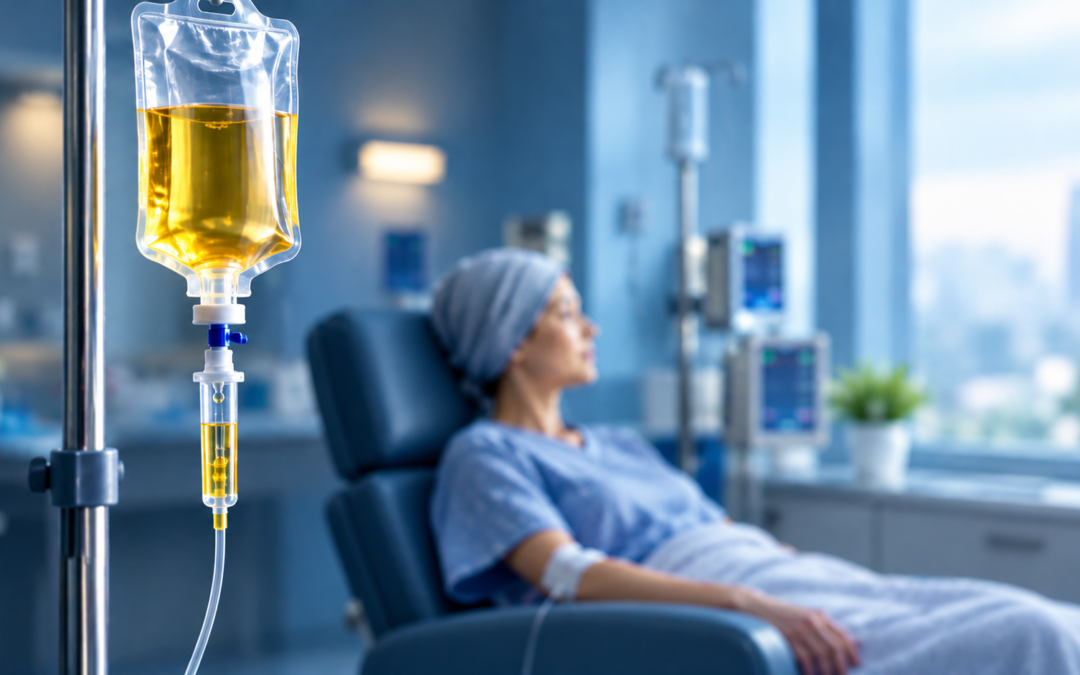
Chemo stops cancer cells from dividing. That’s the whole point of it. Comes as an IV drip, a jab, sometimes just tablets, depends on the cancer. Walk in, get registered, blood drawn, oncologist signs off that you’re fit for that day’s dose, then the drug goes in, then you’re watched before anyone lets you leave. Thirty minutes on the short end, six hours on the long one. Cycles land every one to four weeks. Nothing here is a guess. Every dose gets built around what your blood looks like that morning, not what it looked like last month.
According to the Medical Oncology Team at KNMH, chemotherapy doses don’t get fixed once and left alone, they get recalculated before every single cycle. Blood counts move. Kidneys move. So the dose moves too.
Not sure your body’s ready for another chemotherapy yet?
What Happens Before the First Chemotherapy Session?
Before any drug goes in, a few boxes have to get ticked. No shortcuts.
- Blood Work – Fresh blood every time. Counts checked, kidneys checked, liver checked. Something’s off? The whole schedule waits, simple as that.
- Port Placement – Long regimen ahead? Then a port or central line usually goes in first, saves the smaller veins from getting punctured over and over.
- Consent Review – This is where the oncologist actually talks. Side effects, drug names, how long the whole thing runs, and questions get answered right here, not after the drip’s already going.
- Pre-Medication – Anti-nausea, anti-allergy, both go in roughly thirty minutes before the real drug starts. Skip this part and the first hour turns rough, fast.
So yeah, prep matters more than people give it credit for. And most of it sits with the medical oncology team, who also decide whether it’s a same-day chair or an actual admission.
What Happens During and After Each Chemo Cycle?
Drip starts, and now it’s about watching. Not guessing.
- Drug Sequence – Order matters here, a lot. Give two drugs the wrong way round and you either weaken them or make them meaner than they need to be.
- Vitals Check – Blood pressure, pulse, oxygen, checked every fifteen to twenty minutes through the whole drip. Any reaction at all? It stops right there.
- Recovery Window – Last drug’s in, but nobody’s walking out yet. Short observation window first, just to catch anything that shows up late.
- Follow-Up Test – Comes back about a week later, mostly for one thing, a repeat blood count. That’s when numbers usually crash and infection risk climbs.
Healing happens in between cycles, honestly, not just in the chair. Because patients who actually understand how their cancer diagnosis shaped this particular regimen tend to stick with the schedule better.
Why Choose KNMH For Cancer Treatment?
Kamala Nehru Memorial Hospital’s been running Medical Oncology and BMT since 1994, Government of India-recognised Regional Cancer Centre, tag and all. Day-care chemo, targeted therapy, immunotherapy, all under one roof. Decades of high patient volume at low cost means these protocols are tested. Not improvised. Same team handling your scans handles your chemo, handles your follow-up too. Nothing slips between departments here, that’s the whole point.
Call 9918802141 to book your consultation.
FAQ
How many chemotherapy cycles are usually needed?
It depends entirely on cancer type, stage, and treatment response.
Can chemotherapy start on the same day as diagnosis?
No, baseline blood work and organ function tests come first.
Does chemotherapy always require hospital admission?
Not always, many regimens run as day-care infusions without admission.
What happens if blood counts are too low for chemo?
The cycle gets postponed until counts recover to a safe range.
Reference
Disclaimer: This blog is for general information only and does not replace professional medical advice; transplant eligibility depends entirely on individual diagnosis and health status.